ZONO INTERVIEW (2003)
Conducted by Sadogoat, March 2003
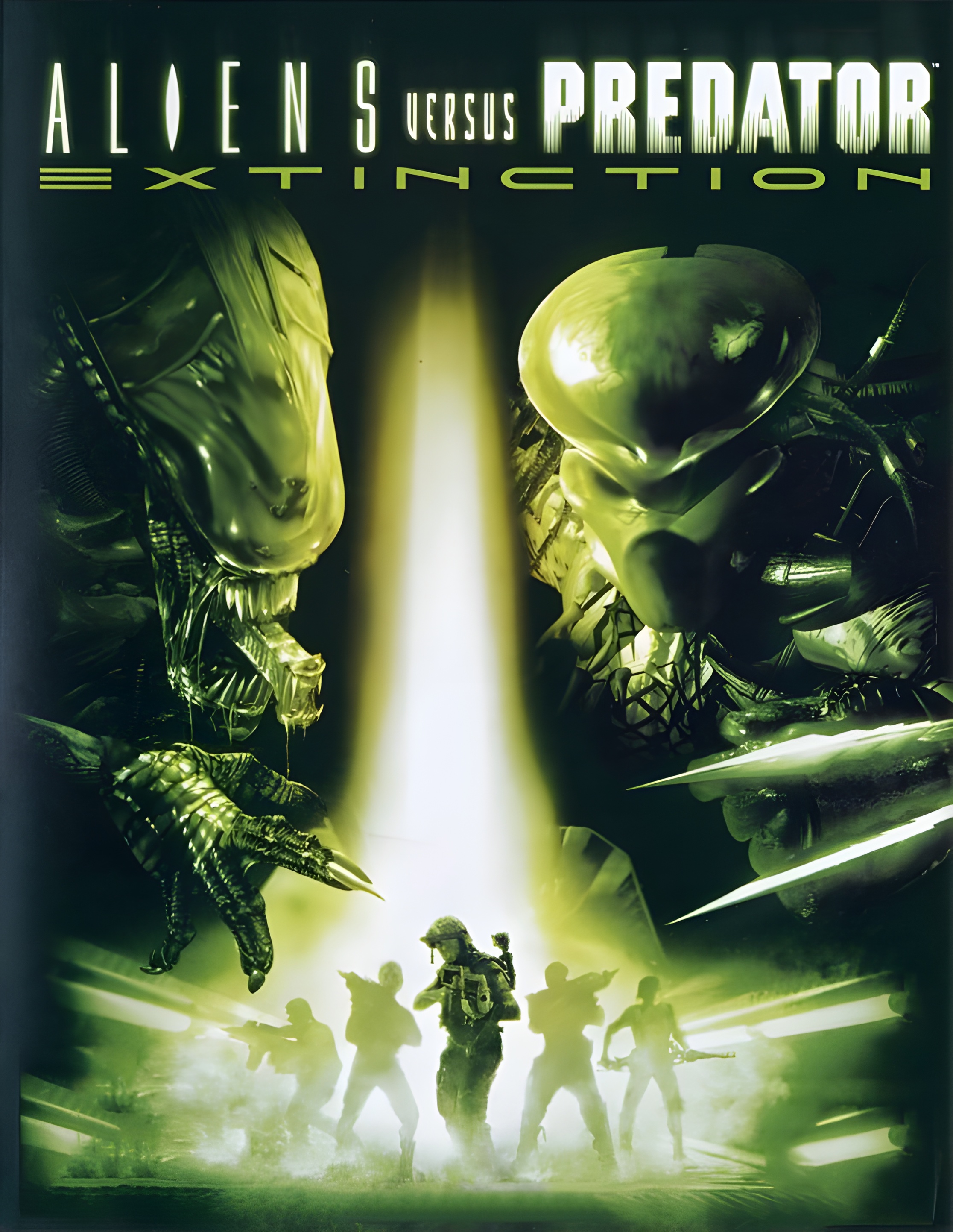
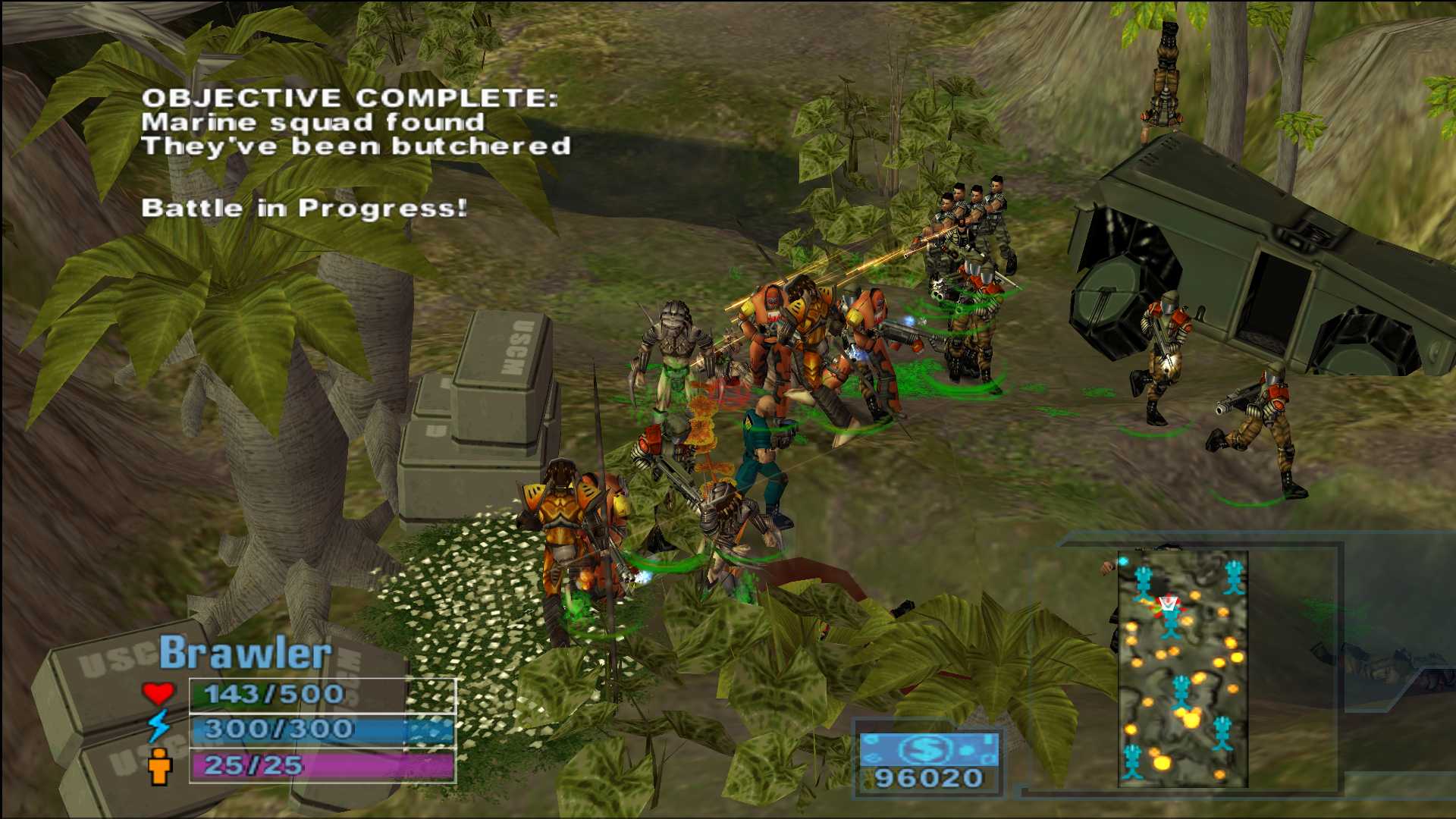
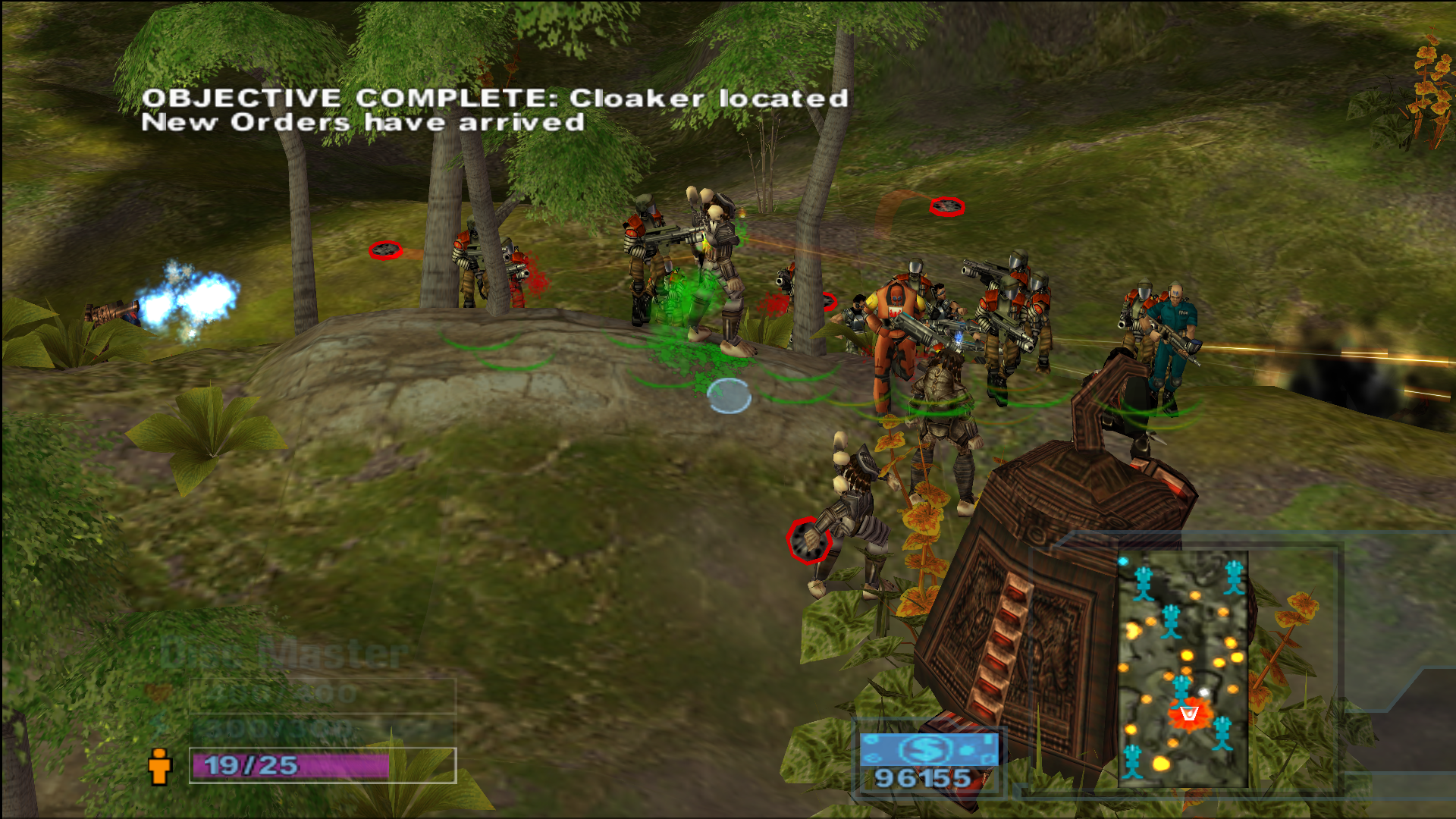
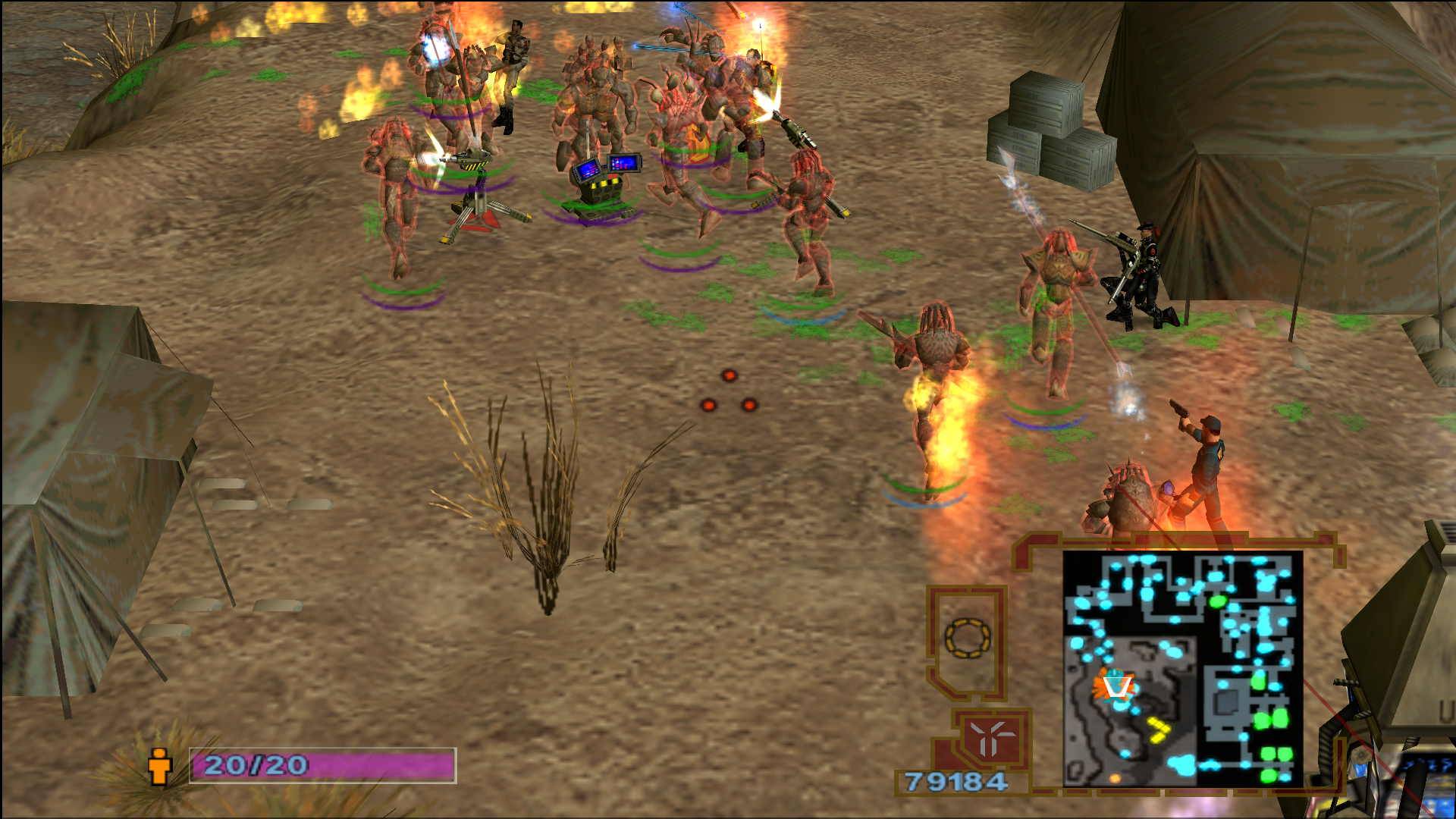
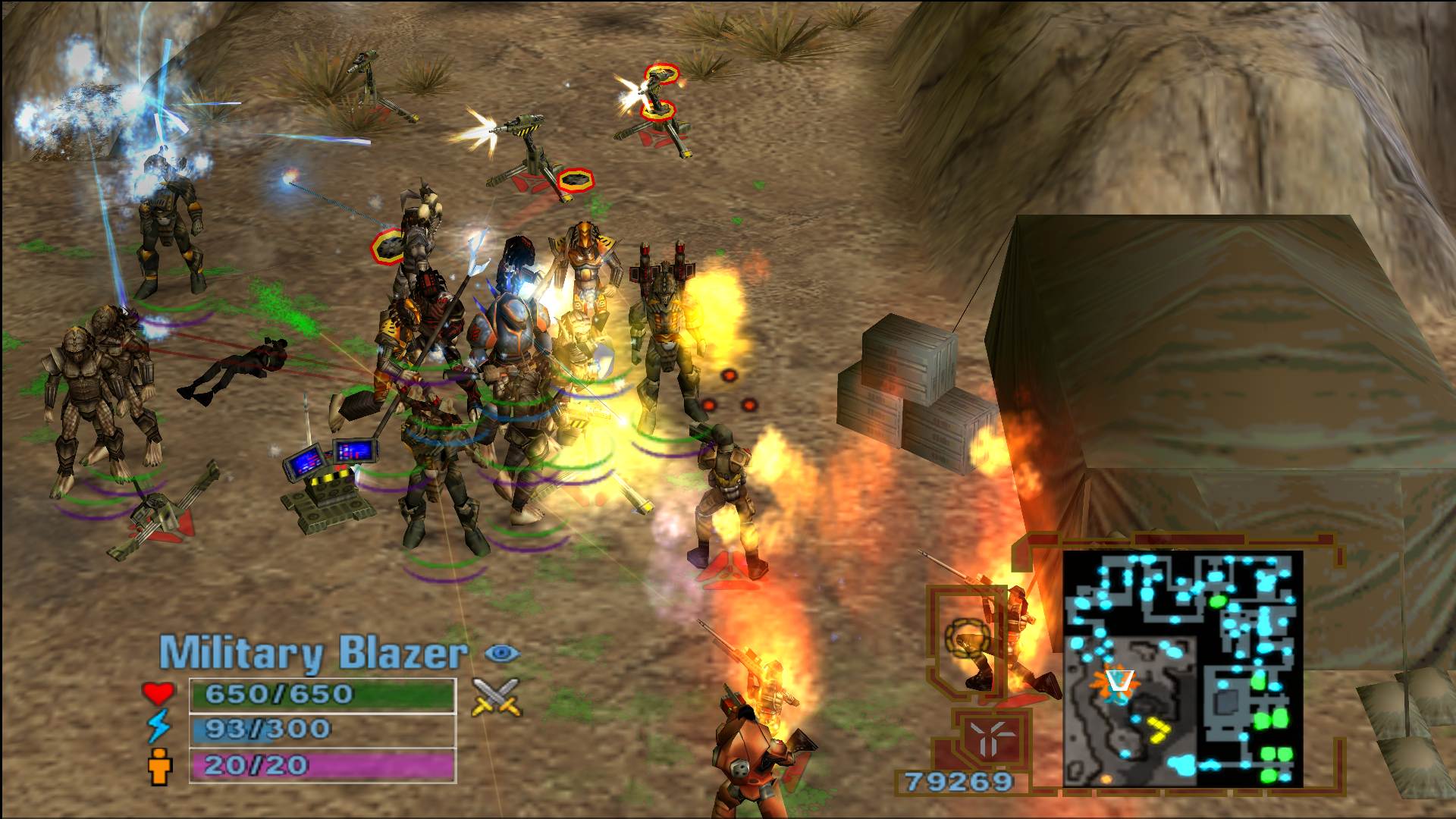
With the release of the newest console-bound Aliens versus Predator game, we contacted the team at Zono to talk about their title, Aliens versus Predator: Extinction.
SG: Before we get cracking with this interview, could you tell us a bit about yourself and your background in the games industry to date?
MA: My name is Mike Arkin and I’ve been involved in game production for about 15 years. I started at Acclaim where I worked on many different games including WWF, T2, The Simpsons and X-Men. Since then I’ve worked at Fox on Die Hard Trilogy and the first AVP game, I produced Battlezone at Activision and I worked for Crave on Battlerealms and Global Ops. Now I am the producer at Zono and I’m helping get AVP:E finished!
SG: Okay, first off with the really obvious questions like “Why an RTS game”? At least 90% of Alien/Predator games have been first-person shooters since 1994, so Extinction marks a departure from tradition. Given that the three species involved have never been involved in large scale conflicts on screen to date (or in games), why was it felt that a strategy game was the way to go with these properties?
MA: Well, this is an interesting question. I can say that for a long time there has been talk about how AVP naturally lends itself to a strategy game. In Aliens the movie, we see a group of marines fighting a large group of aliens and the movie hints at the fact that the marines go to other planets and fight other bad things. So this game was a way to recreate those battles in a way that was a bit different than the existing FPS games.
SG: Under its former title, Natural Selection, this project seems to have been kicking around since 2001 (probably earlier) without any significant information filtering out to the general public during that time. Has development proved particularly difficult over this period of time, given the franchises involved and the choice of game genre they’ve been introduced into?
MA: Development has not been particularly difficult in any one way, but sometimes games take a bit longer to make than is the plan.
SG: Does Extinction bear any structural similarities to your last title, Metal Fatigue, expanding on features or concepts introduced with that title? Or have you pretty much started from scratch with Extinction?
MA: I’ll let Jason answer this one since he was here for Metal Fatigue:
Jason: For the most part we started from scratch. Because this game was built from the beginning to be a console game, the areas we needed to focus on differed greatly from Metal Fatigue. Most of what we brought with us from Metal Fatigue was experience and technical know-how, rather than any specific gameplay feature.
SG: Inevitable comparisons are being drawn between Extinction and Blizzard’s StarCraft (itself having perceptible AVP influences). What’s your take on this?
MA: I love it. StarCraft is one of the defining games of the RTS genre and it’s an honor to be compared to it. I hope that the Blizzard guys play our game as much as we’ve all played theirs.
SG: The notion of a “real-time strategy” title has long implied a game that revolves around resource management as much as action – at least until recent times. How much of a role does resource management play in Extinction? (also taking into consideration the somewhat questionable idea of self-sufficient species like Aliens & Predators having “resources”)?
MA: Well, I agree that resource management is one of the features that make a game an RTS and not just a tactical strategy game. We do have a bit of resource management, but just not in the traditional “worker units collect gold or food” sense. What we have are three different resource models that are more attuned to the specific fiction of each race.
The Marines repair Atmospheric Processors (atmos) which generate cash for the Marines to order more units via dropship. In addition the company pays a small bounty for each Alien or Predator killed so the Marines generate cash for winning in combat. This is probably the most RTS-like of all of the resource models.
The Predators are all about generating honor. The more honor that you get, the more units that you can order from the Elders. A Predator’s primary source of honor is derived from collecting the skulls of enemy units. In addition, they also get a small amount of honor each time they kill an enemy.
The Aliens get some “cash” in the form of resin points for kills, but the primary way that they create new units is by hatching eggs and using host organisms to grow new Aliens – just like the movies. The resin points are used to upgrade units and lay hive nodes, which create hive webbing (that yucky stuff that you see on the walls in Aliens).
SG: Real-time strategy games have long been primarily PC-based, often due to the control systems involved. This being the case, how easy will it be to pick up and play Extinction using a console controller? Furthermore, will the PlayStation 2 version have USB keyboard & mouse support?
MA: Simple answer is that we have created this game from scratch as a console game and as a result the game is very easy to control with a console controller. This also means that there is no mouse support. It would not make sense with the current control system.
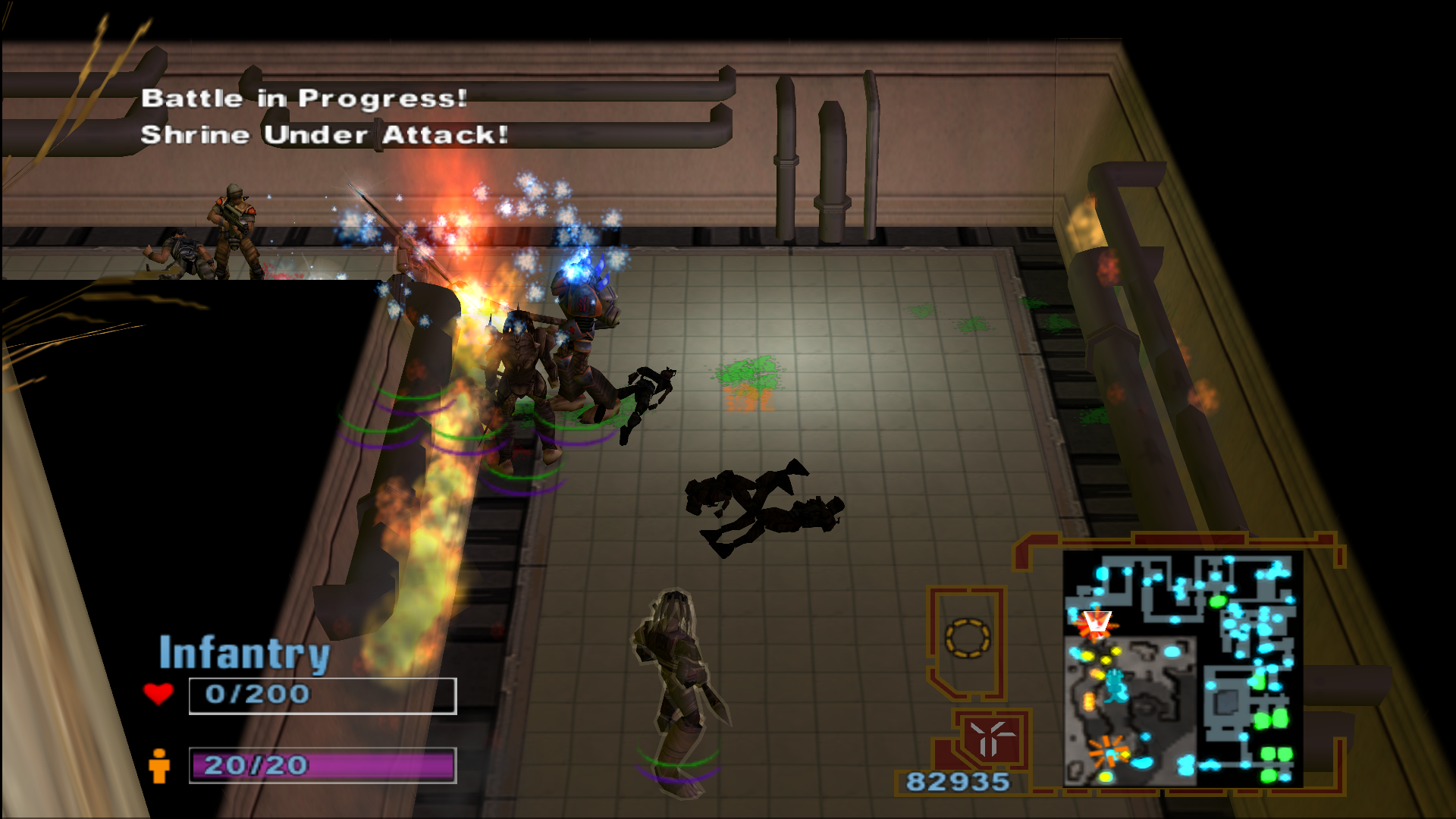
SG: Screenshots released prior to this time of writing have all solely presented outdoor environments from the game. However, will there also be indoor battles in the kind of claustrophobic environments that the Aliens have repeatedly haunted in both games and films alike?
MA: Yes, absolutely. We have a few different indoor environments and they look really cool!
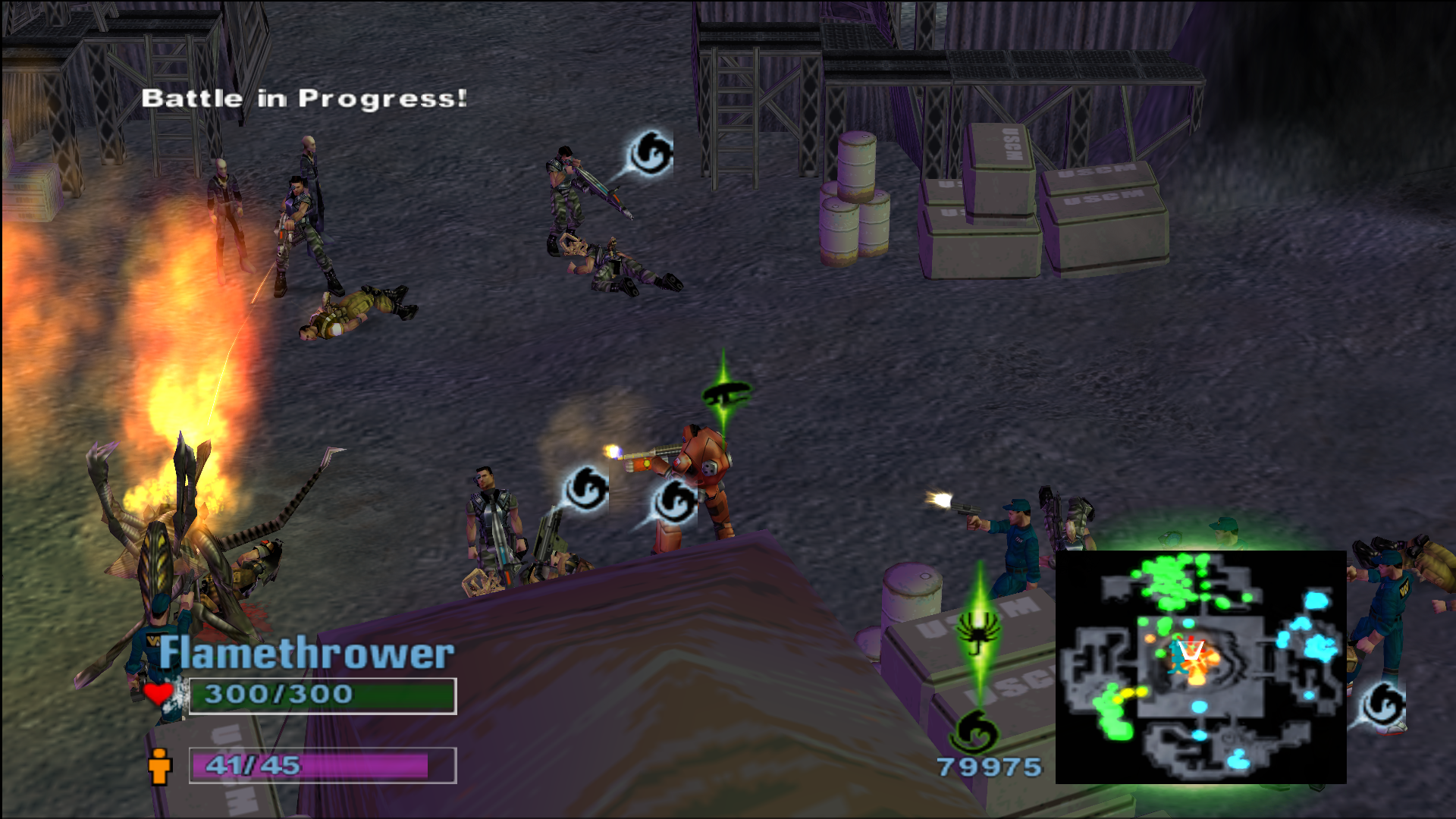
SG: Observant fans have noticed that some of the units depicted in Extinction screenshots seem to bear an uncanny resemblance to those seen in Monolith’s Aliens Versus Predator 2 (for example, the Iron Bear-style mercs & the Marines with orange shoulder-pads). Was this an intentional design decision or purely coincidental?
MA: This was intentional. Fox has created a look for the AVP games that they want to be a consistent look for all of the AVP games and we kept that consistency. Keep in mind that orange shoulder pads make it easier to identify your units on your television screen – even if it's small and you're sitting back a bit!
SG: One fan concern that has been echoed quite a few times is the choice of units made available – particularly in regard to Alien hybrids and some of the more elaborate Predator & Marine units. When deciding on what units would be available for each of the three species, how finely was a balance drawn between faithfulness to established canon (i.e. the movies) and artistic liberty? Or, in other words, how many of the units were conceived from scratch in contrast to those already firmly established in the Alien/Predator universes?
MA: I’ll hand this off to Peter who is the unit guy here at Zono:
Peter: It depends on the species. For the Marines, the Medic is the only new addition, and it's such a standard concept I can't see it offending too many people. For the Predators, we added five units – the Vanguard, the Military Hydra, the Military Blazer, the PredGun and the Shrine. The Aliens have four new units – the Praetorian Hugger, the Praetorian Egg, the Carrier and the Ravager.
Each unit also has an upgrade, and many of these take old units in new directions. It's also the case that certain units from the franchise have come back with new powers. For instance, the Praetorian can now vomit huge quantities of her own blood on nearby units.
Our motivation behind this “artistic liberty” was twofold:
1. Make the game competitive with other RTS titles. Games like Warcraft III and Age of Mythology have hordes of unique units and special abilities. If we stuck with only what had come before in the franchise, we'd have an Alien side with a small number of simple melee units. That would get old in about an hour for most people. RTS's are far more demanding in that regard than FPS's.
2. To give an old franchise new content. This is particularly important for expanding the franchise to new people – ones that don't have an attachment to a rigorous definition of the universe and are in need of exciting stuff to draw them in. Stagnant franchises are dying franchises, and we want to avoid that.
That said, we're pretty hardcore fans of the franchise ourselves, so we've tried to stay true to it. People with the Colonial Marines Technical Manual will certainly see that we've done our homework.
And hopefully fans will like what we've done. Much of what we've tried to do is to go for the jugular with the new stuff and use it to make the universe meaner and more intense. You aren't going to see any baby human/Alien crossbreeds, that's for sure!
SG: Two of the three species in the game (i.e. Aliens & Predators) don’t use monetary currencies – usually a mandatory commodity for purchasing new units and upgrades in most RTS titles. This being the case, how will they improve their forces during the game? Will the system be based on a battle experience point system instead (like those seen in RTS titles like Starship Troopers and Star Wars: Force Commander)?
MA: I think I answered this above. Each race has a different way to collect “money” and a different way to spend it.
SG: The Predator’s vision modes have long played a significant part in its modus operandi. Will they play any significant part in Extinction, given that it doesn’t use first-person perspective and most enemy units will be visible on all sides anyway?
MA: Vision modes do indeed play a major role in Extinction. Many of the ranged Predators receive significant weapon range bonuses when using enhanced vision modes. Two Predators in particular – the Hunter and the Stalker – become especially brutal when using these modes, as they can often kill their prey before it even gets close enough to counterattack.
SG: We tend to ask this with every new Alien/Predator-based game that involves the Colonial Marines – was Lee Brimmicombe-Wood’s popular Colonial Marines Technical Manual used as a significant resource when deciding on and designing the game’s units for the USCM?
MA: Isn’t that a great book! We did use it for reference, but in some places we created units and weapons that go beyond what is in the book. Keep in mind that this game takes place a few years after Aliens and Weyland-Yutani was quite busy making new hardware for the Marines in that time.
SG: How many of the previous Aliens Versus Predator titles did you play through while researching for Extinction?
MA: The team played all of them. I personally played them all myself, especially since I worked on the first AVP.
SG: Is it safe to assume that Aliens movie staples such as the APCs, Dropships, Powerloaders and Sentry Guns all appear in the game, as well as later concepts such as the ExoSuit?
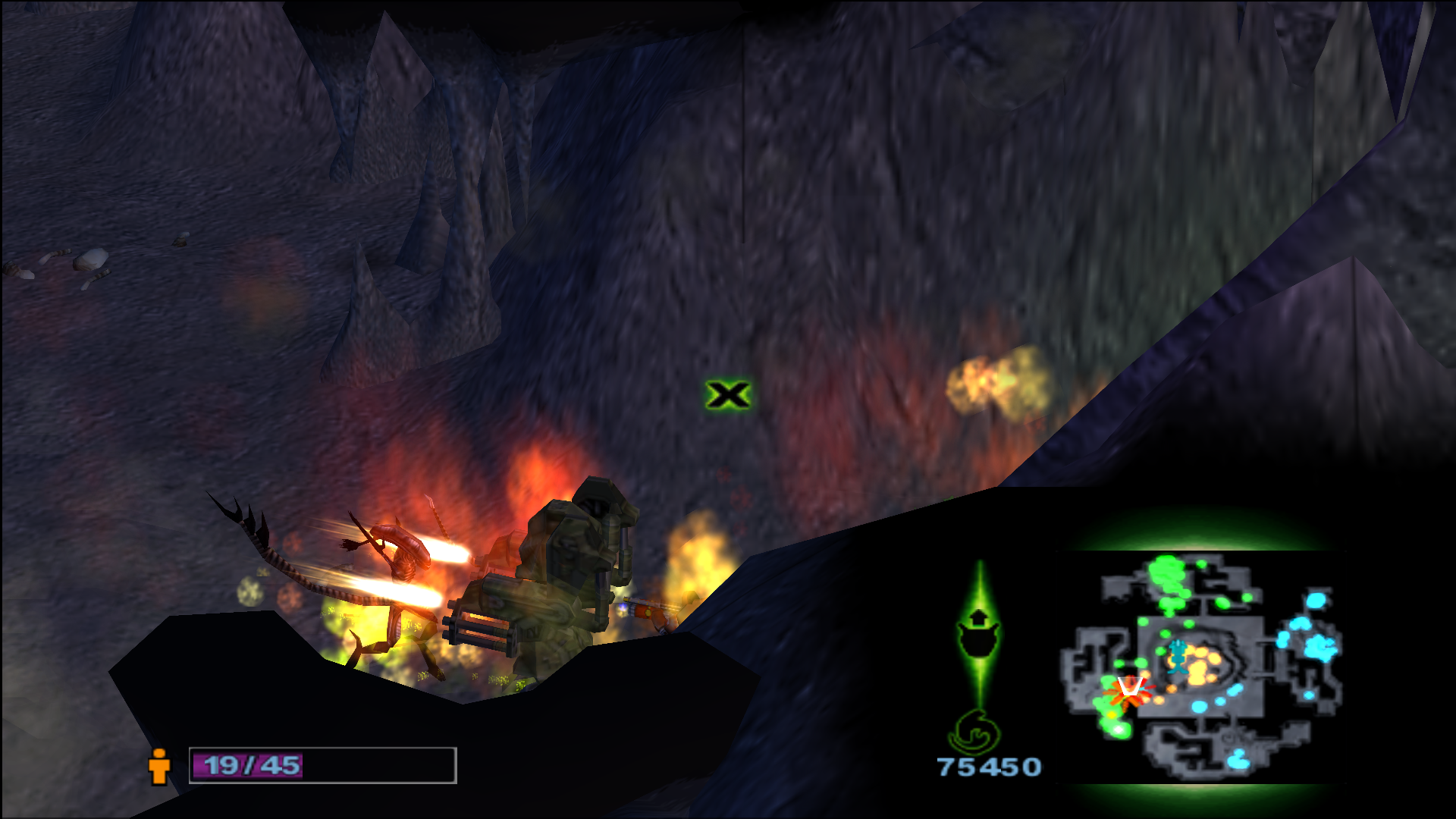
MA: Yup! You get units from the Dropship, you can order up Sentry Guns (and the upgraded Sentry Gun kicks some serious ass!) and when you have cash to burn you can order up an ExoSuit, which is a serious bullet hose! No APC’s though – that was a feature of the game that was dropped a while back for playability reasons.
SG: At what point in the Aliens/Predator universe timeline does Extinction take place? Given that the USCM seems to have long vanished by the time of Alien Resurrection, would it therefore be safe to say that Extinction takes place during the 200-year span between the events of Alien 3 and Alien Resurrection?
MA: Yes, it’s not that long after Aliens, but way before Alien Resurrection.
SG: In recent times, Electronic Arts have made somewhat controversial steps to ensure that blood & gore are minimised in their published titles in order to broaden the target age ranges for their products (examples include Medal of Honor & Battlefield 1942). Given that both the Alien and Predator properties are rather violent franchises with considerable levels of gore, how will EA’s stance affect the presentation and content of Extinction? Will it be gore-free, or will it stick to its guns and keep the graphic bloodshed?
MA: We have some blood, but it is tasteful. Of course Aliens have yellow acid blood and the synthetics have white blood. Blood or not, though, the units in this game do some pretty nasty things to each other, and I don't think anyone will feel that the intensity and viciousness in this title is anything less than what a fan would expect from the franchise.
SG: Obviously the game will have three separate campaigns, one for each species. Will there also be Skirmish or Instant Battle modes as well?
MA: No, we chose to focus on a story-driven campaign game.
SG: As tends to be the case with AVP or Aliens titles for console format, the PC owners (particularly fans of the PC-based AVP series) often feel left out. Do you personally think a PC port might be possible if the console versions are well-received? Would Zono be up for the task?
MA: It’s certainly possible.
SG: Given that Extinction is a console game, does this mean that a custom scenario editor is out of the question as a feature?
MA: Yep, sorry!
SG: There’s been no mention of any multiplayer component for Extinction thus far, despite both Xbox and PlayStation 2 now having online capabilities. Is this mainly because both consoles have only introduced online components and services late in the development of the game?
MA: Wow, I was about to give a long answer to this one, but you hit it right on the head! When we started we planned to add multiplayer, but when we reached the critical point in the schedule when multiplayer needed to go in, the hardware manufacturers were not ready with the online components so we had to choose to drop that feature.
SG: Of the “Big Three” console formats, the Nintendo GameCube seems to have been left in the dark in regard to this game. Is this due to the Cube’s market performance or was there another reason why this particular format was left out of the proceedings?
MA: That was ultimately Fox’s choice. I’m not sure, but the thinking may have been that the GameCube was really a platform for a younger player and might not fit with this style of game.
SG: Do you hope to have the game on show at this year’s E3 Expo?
MA: Absolutely.
SG: Which Alien film and which Predator film had the most influence on you while designing Extinction?
MA: Clearly Aliens. Personally I see it as the only good movie in the whole franchise. Oh, and the original Predator is a fantastic movie. I love Jessie “The Body”.
SG: Finally, aside from the attraction of the core licence/properties, what do you feel AVP: Extinction will offer gamers over and above the myriad other RTS titles already out there?
MA: I’ll hand this off to Peter again:
Peter: Taken as a whole, I think our combat combines elements from some really great RTS's and turns out a mix unlike any other RTS to date. We're close to the action like Myth, so we can make combat up close and personal and much more visceral than what you'd get in an epic scale RTS where the camera is pulled back. But we've got about 30 units and each unit has multiple special abilities and an upgrade that is a lot more than just a statistics change. We've really gone beyond even StarCraft in that regard. I mean, heck, if the upgraded synthetic gets decapitated, he can even return to battle without his head!
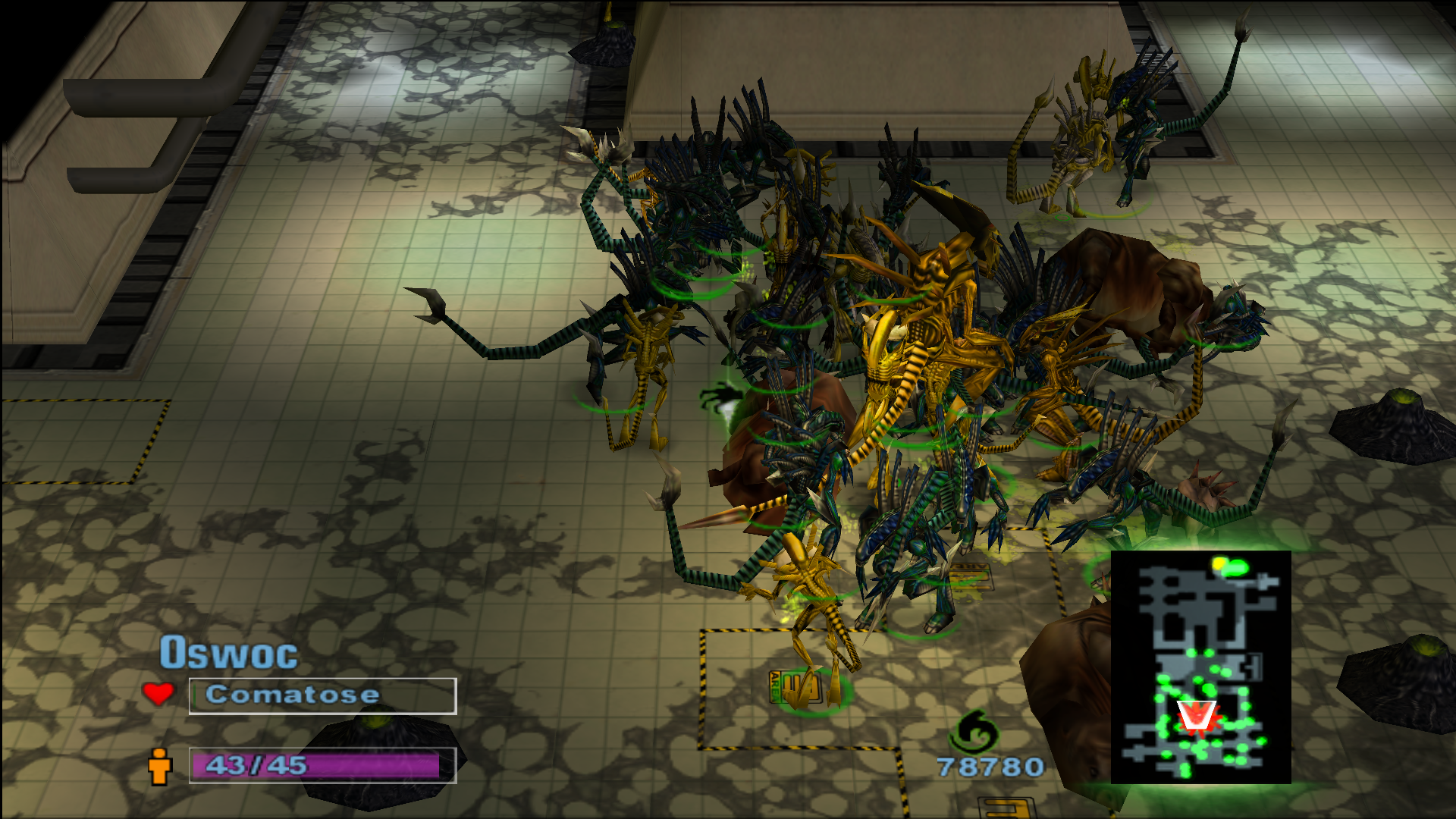
Finally, when battles really get going in our game, look out. When I asked one of my colleagues at another RTS studio for feedback on our title, he said this: our best achievement was that even in battles involving only a handful of units, we had captured some of the feel of combat in Total Annihilation. There's just that much carnage going on. So, I think we've got something unique here, and I'm pretty psyched to see what the fans think.
SG: Okee doke, I think that about concludes our interrogation. Any final comments you’d like to offer to the AVP gamers out there?
MA: This game rocks, please buy it.
Many thanks to Mike Arkin, Peter and Jason for answering our questions and satisfying our curious little minds. Also, thanks to Dave, Paul and Jack for doing everything in their power to get us the green light for this interview.